

How to Build a Referral Program Around a Friend's First Purchase
How to Build a Referral Program Around a Friend's First Purchase
Word of mouth can be a shop's most credible source of new customers. A referral program gives it a structure: a shareable code, a clear benefit for both people, and a record of what happened.
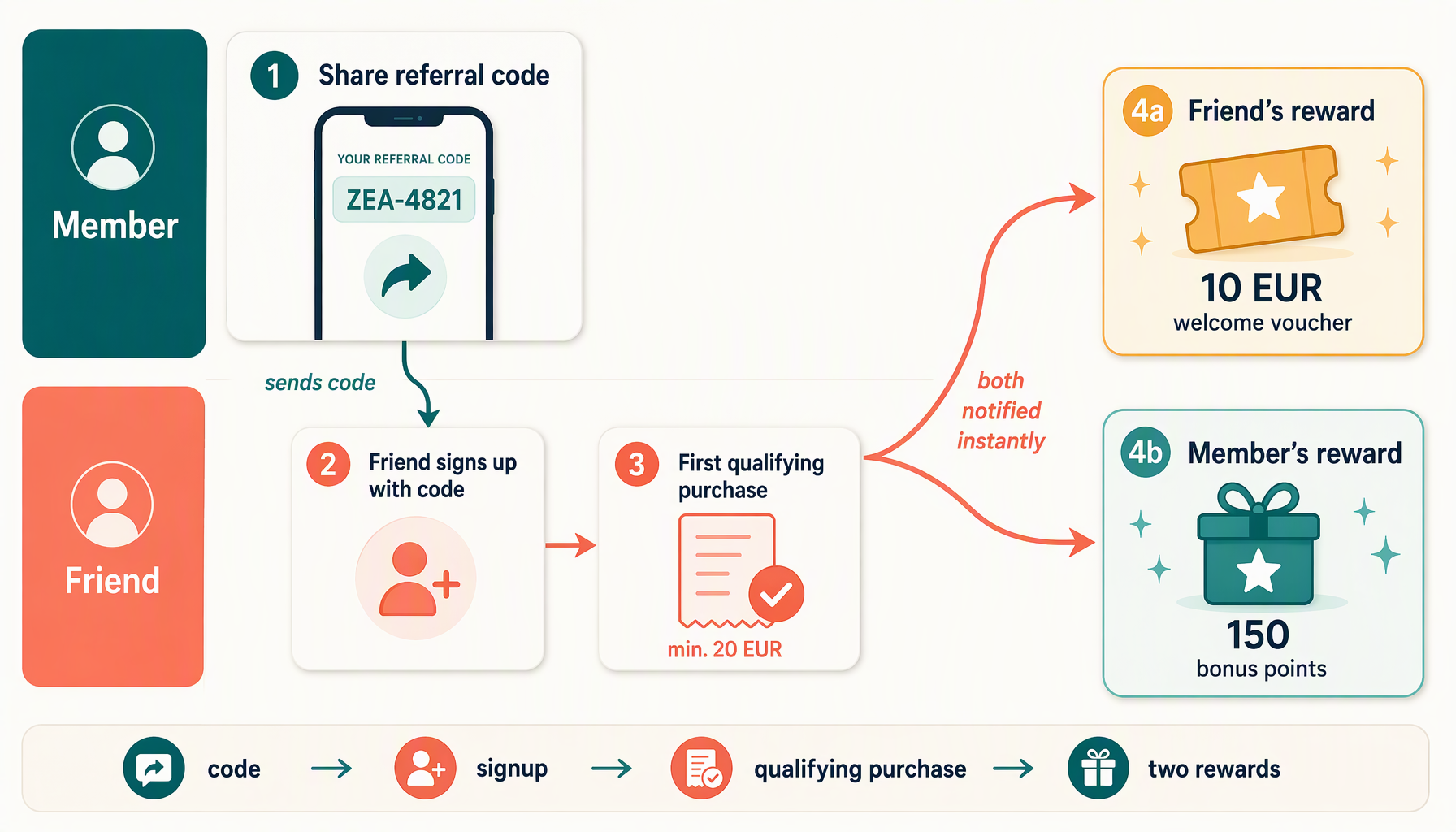
The design decision that matters most is when the reward is earned. If the reward lands when a friend merely signs up, the program can fill your list with inactive accounts. If it lands when the friend makes a first purchase, both sides of the program point at the outcome you actually want.
This guide walks through that structure: the reward, the share moment, the message, the counter process, and the tracking.
Set rewards you can afford twice
A two-sided referral program pays two rewards for one new customer: something for the person who referred and something for the friend. Budget for both.
Work from gross profit after direct costs, not revenue. If a typical coffee order at a hypothetical café leaves $3.50 after ingredients, packaging, and other direct costs, a combined referral cost of $2 to $3 may be sustainable if referred customers return. A combined cost above that first-visit gross profit means every referral loses money unless the customer comes back.
Two common structures:
- Both sides receive points toward the existing loyalty program. The currency is already meaningful to members, and points cost less than cash-equivalent discounts.
- The friend receives a first-purchase benefit, such as a free add-on or a fixed amount off a qualifying order, and the referrer receives points or a smaller benefit after the qualifying purchase.
Whichever you choose, define the qualifying event precisely: a first completed purchase of at least a stated amount, within a stated window, by a customer who is genuinely new. Decide how you will handle staff members, existing customers with new accounts, and refunds. Written rules prevent the arguments that kill referral programs.
Zea's referral workflow supports rewards for both the referrer and the referred customer, with the referred side tied to a first qualifying purchase. The specific rewards and limits depend on how you configure the program and which plan you use.
Make the share moment effortless
Referrals happen when a happy customer has an easy way to share at the moment they feel like sharing. Complicated codes typed from memory do not survive that moment.
Practical placements:
- A referral section inside the member's rewards account, with a personal link or code and their running tally.
- A short line at the bottom of receipts or order confirmations.
- A counter sign that invites members to ask about bringing a friend.
- A periodic mention in your regular customer communications, not a separate campaign every week.
Give members one sentence to share with it. "Bring a friend — you both get a reward when they make their first purchase" is easier to repeat than a paragraph of conditions. The friend's landing page should carry the full terms: what they get, what purchase qualifies, and when the referrer's reward arrives.
Tell members what happens after they share. If the reward only arrives after the friend's purchase, say so plainly. Members who expected an instant reward and receive nothing will stop trusting the program, and they will tell other members.
Prepare staff and the counter
The referred friend's first visit is where the program succeeds or fails. Staff should be able to recognize a referral claim, verify eligibility simply, apply the benefit, and record the purchase as the qualifying event.
Prepare a short staff reference: what the friend shows, what they receive, what purchase qualifies, what the referrer gets, and who to ask when something is unclear. Test the full path with a staff account before launching, including the point where the referrer's reward is awarded.
Handle the awkward cases in advance. What if the friend lost the link? What if someone claims to be new but already has an account? What if the qualifying purchase is refunded the next day? A written exception rule keeps decisions consistent and protects staff from improvising.
Message both customers at the right moments
Three messages carry most referral programs:
To the referrer, at share time: confirm the code is active and restate the conditions. "Your code is ready. When your friend makes their first purchase of $5 or more, you'll both receive your rewards."
To the friend, at first contact: explain the benefit and the one condition. Avoid burying the qualifying purchase in fine print; surprises at the counter create refunds and bad reviews.
To the referrer, after the qualifying purchase: confirm both rewards landed. This is also the natural moment to invite another share, while the success is fresh.
Where your platform supports automatic notifications, review the wording and timing before enabling them. Where it does not, plan a light manual process rather than promising members updates you will forget to send.
If you also want to prompt your best members to start referring, that is a separate campaign with its own audience. Zea's Smart Audiences includes a use case for high-value members who have never referred anyone, which you can pair with a referral invitation. Check the message against your program's real conditions before sending, and confirm the capability is included in your plan.
Track what the program actually produces
Separate the funnel into stages: members who shared, friends who clicked or joined, friends who made a qualifying first purchase, rewards paid, and reward cost. Each stage can fail for a different reason, and each failure has a different fix.
Many shares with few friend purchases suggests the offer or the landing page is unclear. Friend purchases with few repeat visits suggests the referred customer tried you once and moved on, which is a retention question rather than a referral question.
In an illustrative example, suppose 30 members share their codes in a month, 20 friends visit, and 12 make a qualifying first purchase. If each qualifying pair costs $2.50 in combined rewards, the month's referral cost is $30 for 12 new purchasing customers, or $2.50 each. Whether that is good depends entirely on what those customers do next, which is why the second purchase matters more than the first.
Review referred customers' return behavior after 30 and 60 days against your other new customers. If referred customers return at a similar or better rate, the program is building the customer base you want. If they do not, adjust who you invite to refer and what the friend's first experience includes.
Keep the program simple for its first cycle. Add tiers, bonuses, or seasonal boosts only after the basic flow works without manual patching. Our reward-cost guide shows how to pressure-test the reward amounts before you publish them.
Questions about referral programs
Should the friend's reward require a purchase?
Requiring a qualifying first purchase keeps the program pointed at real customers and limits abuse. Without it, expect signups with no visits and a reward bill that reflects curiosity rather than demand.
Can I run referrals without a loyalty program?
Yes, using codes or links, but a loyalty account gives both customers a place to see their rewards and gives you the purchase history to verify the qualifying event.
How do I stop people from referring themselves?
Write the rule before launch: one account per person, no self-referrals, staff excluded, and verification through purchase history. Enforce it consistently rather than negotiating exceptions.
See how Zea's referral and engagement capabilities fit the program you have in mind, and review the plan that includes referrals before launch.